
Dhaka, August, 2021.
The normal activities in the whole world came to a pause, emerging the new normal, due to the COVID-19 pandemic. Frequent mutation inducing nature of the SARS-Cov2 virus is making the vaccines difficult to confer full protection against this virus. The same reason is influencing the efficacy of the antiviral drugs against COVID-19.
However, Prof Hemayet Ullah and his team from Howard University has published their study in the bioRxiv journal where they showed a new target in the viral genome which is not vulnerable to this frequent mutation and can be considered as a solution for designing antiviral drugs. This region of the antigenome is called 5’ Poly-U (Uridine) tract. This is the region which generates the 3’ poly-A tail during the maturation of the positive strand RNA transcript. Any mutation in this region can hamper the replication of the virus inside the host cell without disturbing the host transcription machinery, since the host RNA maturation does not depend on this Poly-U tract. The team has targeted the 5’ poly-U tract in mouse coronavirus (MHV-A59) using a modified DNA oligo with 3’ polyA and infected experimental mouse cells with the virus. They observed that this treatment significantly prevented the virus induced cell death in the mouse.
This is not the end but the first step to a new beginning. This strategy can help develop novel classes of drugs that can inhibit coronavirus infection in host cells. In addition this tag can be used as a reliable early detection strategy for viral infection since this 5’ poly-U tract is immediately generated upon infection. GNOBB wishes heartfelt congratulations to Prof Hemayet Ullah and his team for this timely research to identify a provisional solution for ending this ongoing pandemic. Click here to read the full article.
https://www.biorxiv.org/content/10.1101/2021.07.26.453908v2
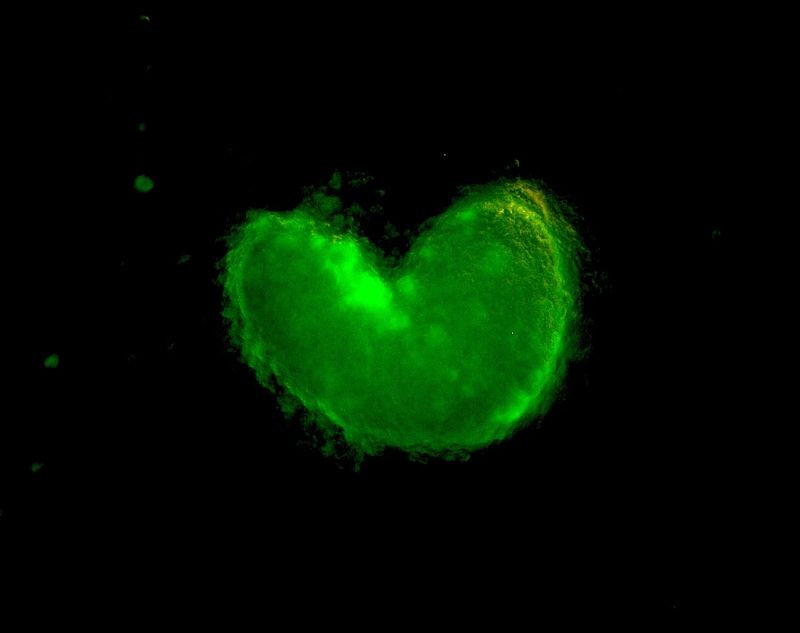
image shows mouse coronavirus making plaque on mouse fibroblast cell line 17CL-1. Call it "Corona Love"
bioRxiv publishes preliminary scientific reports that are not peer-reviewed and, therefore, should not be regarded as conclusive, or treated as established information. The team is now working with NIH/NIAID antiviral center to test SARS-COV-2 specific oligo in all known current variants.